 Trusted Shops: 4.84/5,00 (10085)






Environmental protection and sustainability at session
Awareness of the environment and resources
As a retailer with two large branches and an increasingly popular mail order business, we are aware of our ecological responsibility. We therefore make every effort to make our behavior as resource-efficient and sustainable as possible.
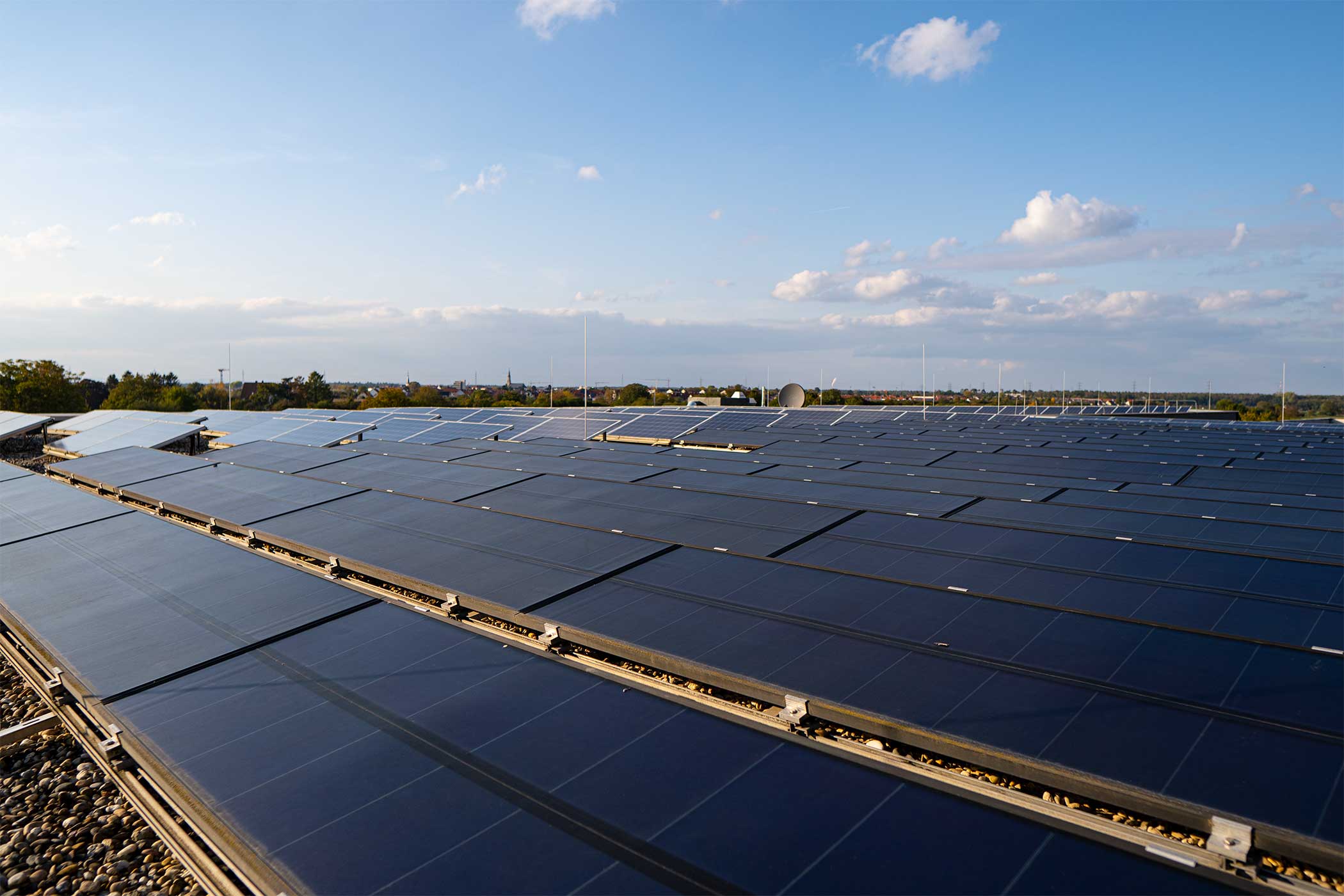
The building in Walldorf, which was newly built in 2012 and has 3,000 m2 of sales space and office space on 6 floors, was equipped with particularly efficient air conditioning technology and a solar system, which generates a large part of the daily energy requirement with 51 kWp.
Bags – disposable items or accessories?
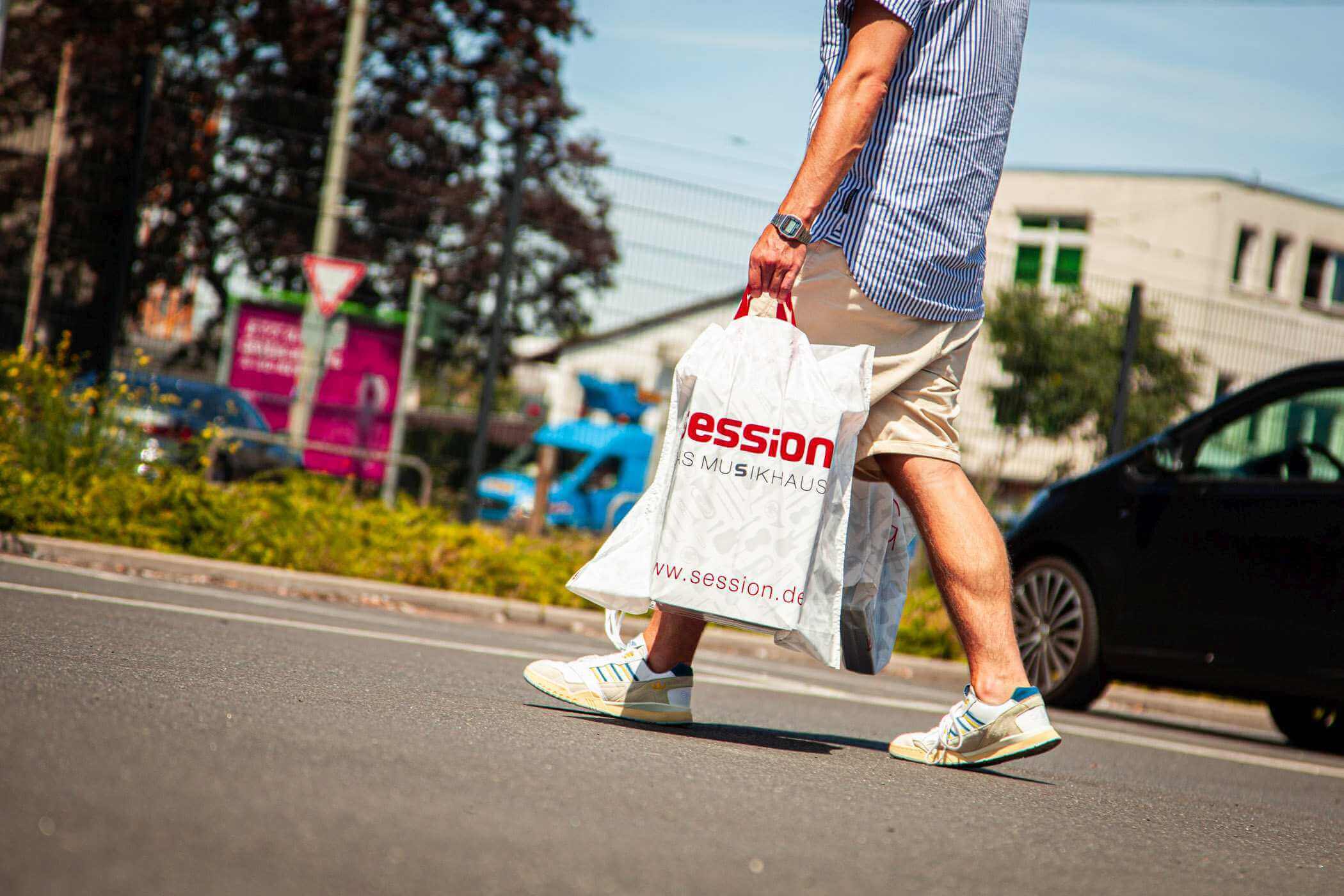
In order to avoid waste, we have removed our plastic shopping bags from our range. Although these were already “biodegradable”, their optimal disposal is not guaranteed and their reusability is also limited.
In recent years it has also become clear that our customers want a bag less and less because they have a bag or a backpack with them - that's practical and looks great on you, keep it up!
Disposal and recycling of packaging waste
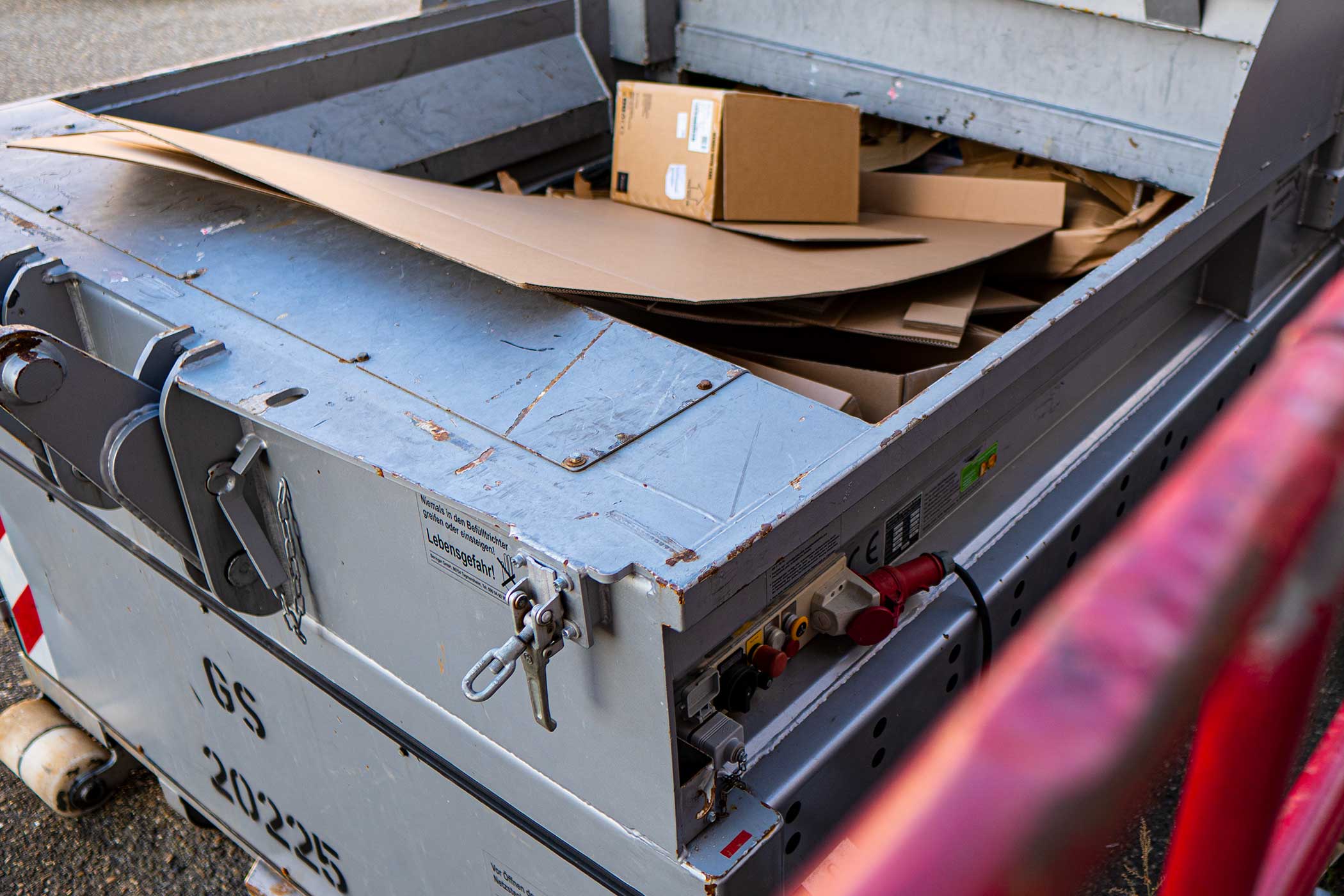
To ensure that musical instruments survive the entire supply chain from the manufacturer to your hands undamaged, they are often elaborately packaged. This creates a lot of cardboard and plastic padding. So that they can be recycled, we separate and collect these materials and hand them over to our partner interseroh for recycling. We will be happy to keep any packaging and components you do not need. Interseroh will also give you information about drop-off points in your area by calling 0800 1010855 (toll-free). Alternatively, you can simply put plastic and paper packaging in the waste paper or yellow bin.
interseroh recycling certificate and confirmation of participation in the dual system 2016
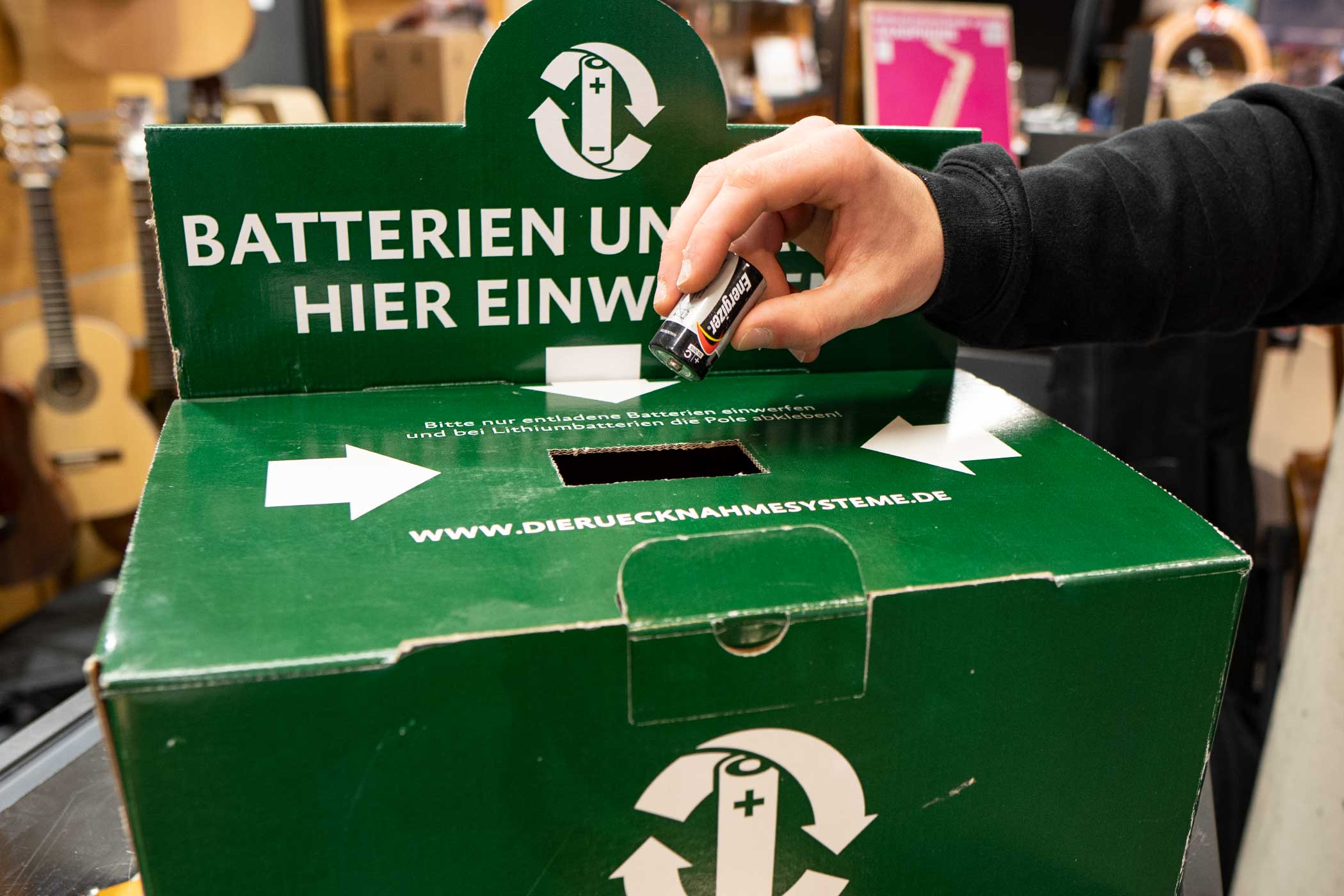
Disposal of batteries
Under no circumstances should batteries be disposed of with household waste. They contain toxic substances that can cause harm when the waste is processed. As an end user, you are therefore obliged to return used batteries. This means that questionable substances can even be reprocessed if necessary. Batteries or accumulators that contain harmful substances are marked with the symbol of a crossed out garbage can. The chemical name of the pollutant is also given: Cd stands for cadmium, Pb for lead and Hg for mercury.
You can return batteries free of charge after use at the point of sale or at municipal collection points. You can even simply send them back to us:
session GmbH & Co. KG
Central warehouse/returns: used batteries
Gutenbergring 19, Hall 45
69168 Wiesloch
Disposal of old devices
We're happy to help you try to breathe new life into an aging electronic instrument . Sometimes such a device simply has its life behind it. As much as it hurts our souls to dispose of old instruments or equipment, we are happy to ensure that they are at least used in such a way that their usable raw materials are recycled - and thus perhaps experience a rebirth. As a mixer. Or telephone.
We are a member of the “take-e-back” take-back system. Further information can be found at www.take-e-back.de .
You can find further information at the end of this page.
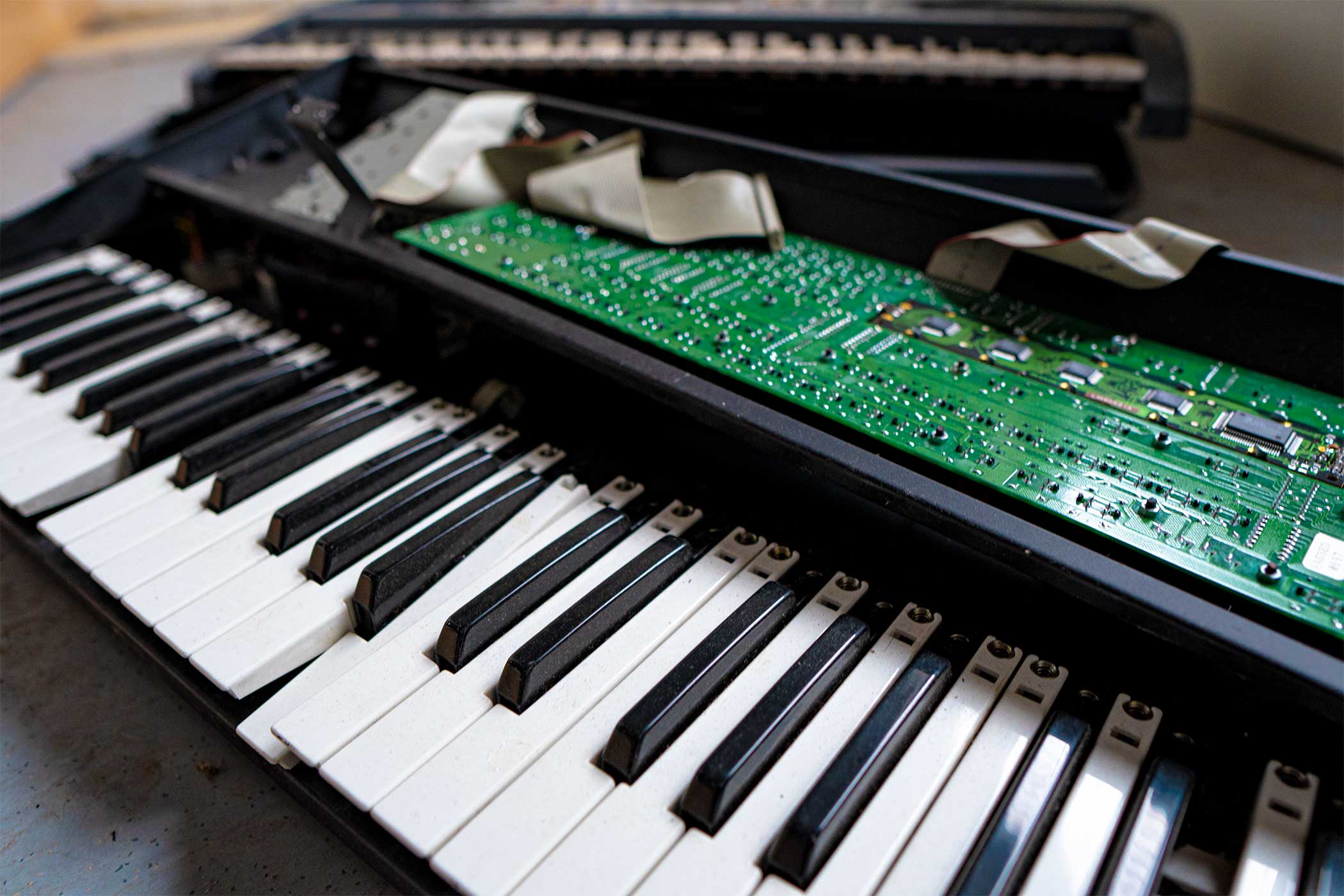
Electrical and electronic equipment – information for private households
The Electrical and Electronic Equipment Act (ElektroG) contains a variety of requirements for the handling of electrical and electronic equipment. The most important ones are compiled here.
1. Separate collection of old devices
Electrical and electronic equipment that has become waste is referred to as old equipment. Owners of old devices must collect them separately from unsorted municipal waste. In particular, old devices do not belong in the household waste, but in special collection and return systems.
2. Batteries and accumulators as well as lamps
Owners of old devices must generally separate old batteries and accumulators that are not enclosed by the old device, as well as lamps that can be removed from the old device without destroying them, from the old device before handing them over to a collection point. This does not apply if old devices are prepared for reuse with the involvement of a public waste disposal agency.
3. Options for returning old devices
Owners of old devices from private households can hand them in free of charge at the collection points of the public waste disposal authorities or at the collection points set up by manufacturers or distributors in accordance with the ElektroG. If you have ordered from us online or in our branches, you can either hand it in to us, request a return at session or find a return point near you here: www.take-e-back.de
The possibility of returning an old device free of charge exists for distributors who are obliged to take it back, among other things, if a new, similar device that essentially fulfills the same functions is given to an end user.
You have the option of returning an old device free of charge that has a similar type or function to a new device you purchased in return. This means that if you buy a compact system, for example, you can return an old compact system or have it picked up
This applies to devices in categories 1, 2 or 4 according to Section 2 Paragraph 1 ElektroG, namely “heat exchangers”, “screen devices” or “large devices” (the latter with at least one external dimension over 50 centimeters).
There is also the possibility of returning free of charge to the distributor's collection points, regardless of the purchase of a new device, for old devices that are not larger than 25 centimeters in any external dimension, limited to three old devices per device type.
4. Data protection notice
Old devices often contain sensitive personal data. This applies in particular to information and telecommunications technology devices such as computers and smartphones. In your own interest, please note that each end user is responsible for deleting the data on the old devices to be disposed of.
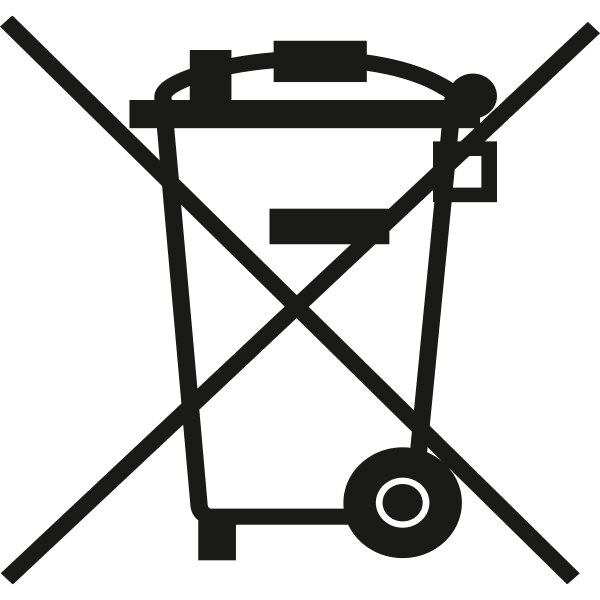
5. Meaning of the “crossed-out garbage can” symbol
The symbol of a crossed-out garbage can, which is regularly shown on electrical and electronic devices, indicates that the respective device must be collected separately from unsorted municipal waste at the end of its life .
6. notice on waste avoidance
According to the provisions of Directive 2008/98/EU on waste and its implementation in the legislation of the Member States of the European Union, waste prevention measures generally have priority over waste management measures. Measures to avoid waste in the case of electrical and electronic devices include, in particular, extending their life by repairing defective devices and selling functional used devices instead of sending them for disposal. The federal government's waste prevention program with the participation of the states contains further information.


Why session?
Items from our huge range of in-stock items are usually dispatched the same day!
